
Transit ridership is making a comeback, funding is not.
While public transit ridership is making a comeback, the funding is not.
In 2014, I managed the campaign for Proposition B to expand Muni funding based on population size, and have long understood the importance of having a fully funded public transit system that is safe, clean, and reliable. I support both transit funding measures headed to the ballot this November: a local parcel tax to fund Muni, and Connect Bay Area - a regional sales tax that will generate $1 billion annually for BART, Muni, VTA, Caltrain, and others.
These measures are about keeping our transit system alive, and the stakes are very real. Without additional funding, Muni and BART will see significant cuts to service, routes, and operating times. That means longer waits, fewer connections, and entire neighborhoods left behind. It would impact how workers reliably get to their jobs, which would be detrimental to the sustainability of our local businesses and nightlife.
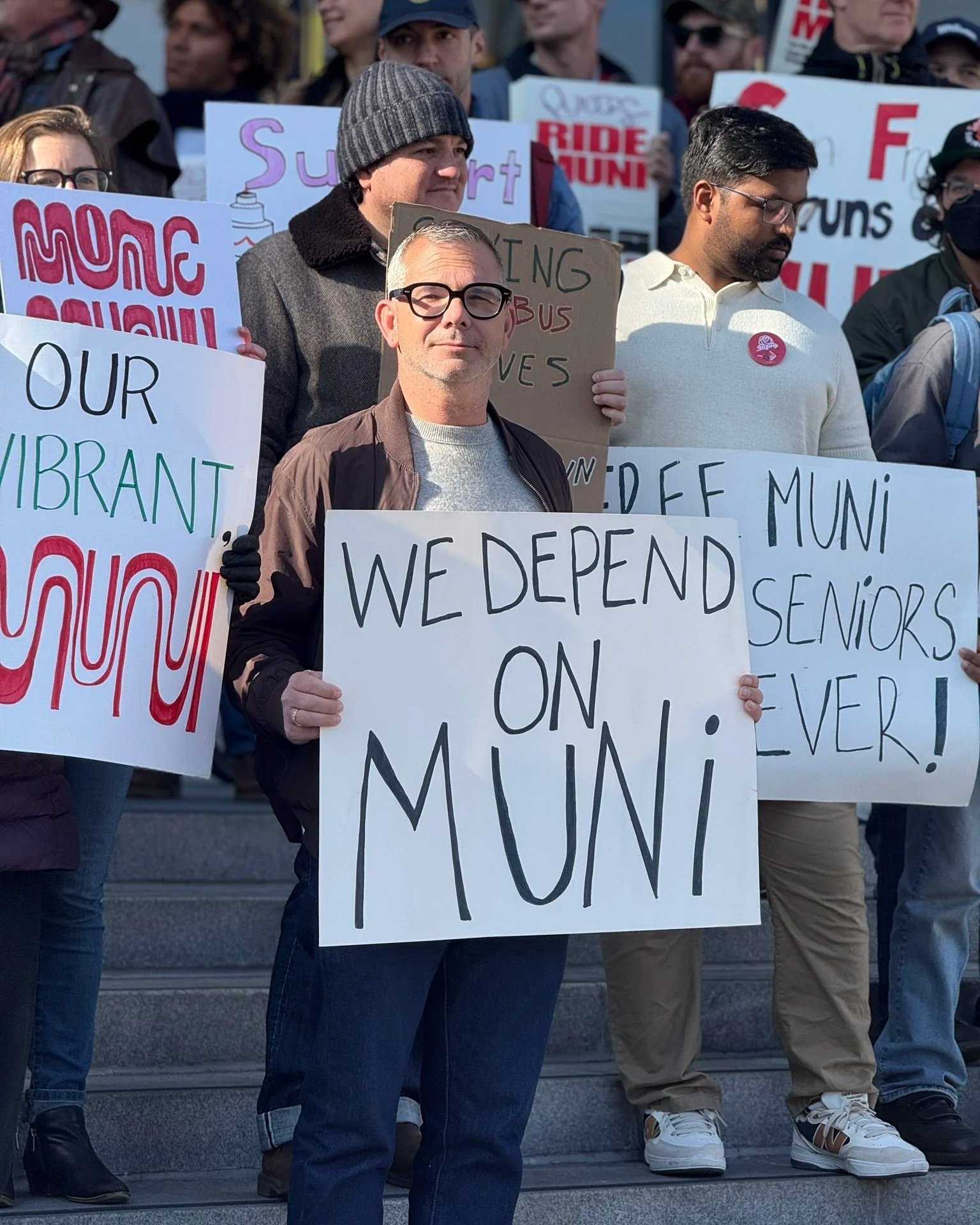
San Francisco has always been a service industry town. From the gold rush to decades of innovative technology and ground-breaking medical research – our workers have been the backbone of this city through it all, keeping the lights on and the wheels turning. Reliable, safe, clean, and affordable public transit is how people go to work, get to appointments, and move through their lives.
Over the last 15 years we’ve seen the steady privatization of transit – from the near decimation of the taxi industry to make way for the rideshare industry that crushed labor protections for workers with low pay and no benefits, to autonomous vehicles using San Francisco as a testing ground, often putting us at risk without proper safety protocols and guardrails in place. We’re already seeing those risks. Autonomous vehicle failures have blocked streets and delayed emergency responses during the most critical of times. Unregulated expansion puts safety second. And, if things go as they plan, AVs will eventually replace delivery workers.
We can invest in a system that serves everyone, or we can allow private interests to reshape our streets around profit, not people. Technology should support our transit system, not undermine it.
My vision is simple: A district where people can walk, bike, and take public transit safely. Where kids can get to school, seniors can get to appointments, and workers can get home without barriers. That means real investment, safer streets, and a fully connected transit network.
