
Housing is health.
15 years ago, after spending my 20s living on the streets in San Francisco, I found recovery and got back on my feet. As I then got started in public service, it was the experience of living through those challenges that gave me the critical perspective needed to address some of San Francisco’s biggest problems.
I was appointed by Mayor Ed Lee to the San Francisco Shelter Monitoring Committee, where we did shelter site visits to ensure habitability, cleanliness, and investigate complaints. I also spent a number of years as an appointee of Governor Jerry Brown then Governor Gavin Newsom to the California Homeless Coordinating and Financing Council - which became the California Interagency Council on Homelessness a few years ago.
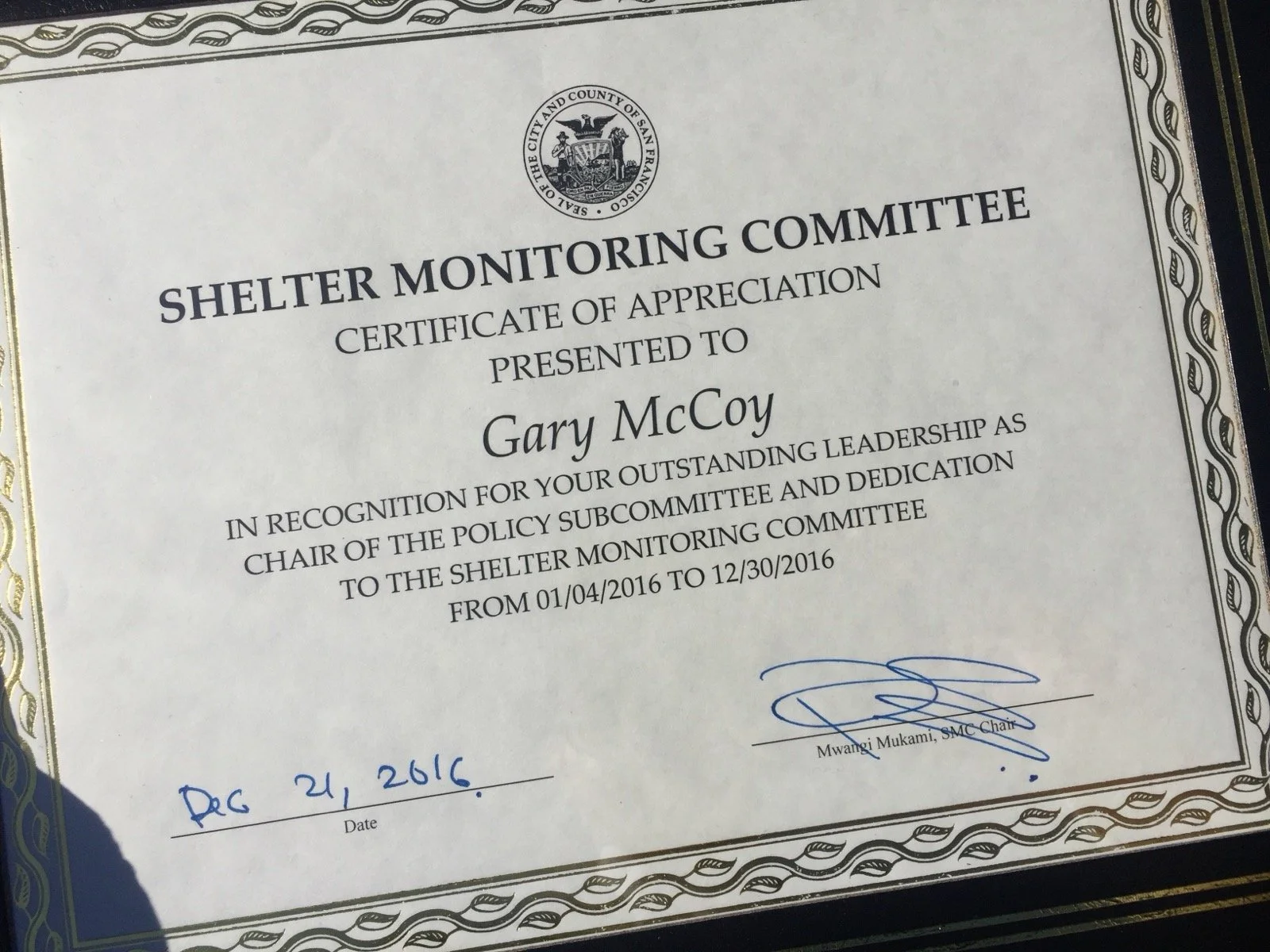
Certificate of appreciation for my service as Chair of the policy subcommittee during my time serving on the San Francisco Shelter Monitoring Committee
Our primary mandate on the Council was to work with state agencies to implement Housing First policies to eliminate barriers to housing - ranging from past criminal convictions, bad credit, past evictions, and more.
Housing First is more than just finding people placement into housing directly from the streets, it’s also how we give people opportunities to qualify for housing after they’ve previously made decisions in their life that would otherwise impact those opportunities. It allows someone with a substance use disorder in recovery to find housing, it provides opportunity for a single-mother who has bad credit from an abusive former-spouse or partner, it houses someone that had an eviction on their record from before they started working to better themselves, and gives a second chance to someone that recently completed probation or parole.
While there has been recent opposition to Housing First in San Francisco, we can strengthen this approach to be more successful by providing the right services and resources to those struggling with substance use disorder and mental health challenges. This starts with simply reforming the way Coordinated Entry works. By doing a better job of assessing folks prior to housing them, we can get a better understanding of their risk of overdose, as well as physical, mental, and behavioral health needs. While San Francisco doesn't have funding to provide resources necessary for these folks to thrive in every housing site, they do exist in a number of housing sites around the City. And it’s often those sites that have not had overdose deaths because they have onsite behavioral health programs, Narcan floor captains, and other proven interventions.
I fully support Recovery Housing as well. While harm reduction kept me alive to get me into the doors of treatment, I’ve been totally abstinent from drugs and alcohol for over 15 years, I understand the importance of a community conducive to my recovery. But I do not support defunding Permanent Supportive Housing and using encumbered Permanent Supportive Housing funds for Recovery Housing. I firmly believe we should continue advocating for the use of Prop 1 funds to expand our Recovery Housing stock, and the supply of Recovery Housing should be contingent on an actual needs assessment through the Department of Public Health. When people relapse – which is the simple, statistical reality of substance use disorder – and are then required to leave Recovery Housing, we need to ensure we’ve got adequate units of Permanent Supportive Housing for them to move to, without causing a bottleneck and longer waitlists for others.
The system that helped me didn’t require perfection before offering stability. It recognized that housing and stability are what make recovery possible. There was a full ladder from homelessness available to me - the streets to shelter, single room occupancies (SROs), treatment to co-op housing, permanent supportive housing and rental subsidies, to market rate rent. That doesn’t exist to the extent today that it did for me, and rebuilding that pipeline is something I will fight for as Supervisor. Housing is health.
